Celebrating 20 years of working on all things economic abuse...
2026 marks twenty years since I started working in the violence against women and girls' (VAWG) sector.
Leading the policy and parliamentary function for Refuge between 2006-2011 brought me into contact with women and children using the charity's services. It is from them that I became aware of the devastating impact of economic abuse.
I concurrently embarked on an MA in the Woman and Child Abuse Studies Unit (CWASU) at London Metropolitan University. The course was transformational, laying the foundations for everything I have done since. CWASU introduced me to feminism and it is where I undertook the first piece of research on economic abuse.

and 10 years a Churchill Fellow!
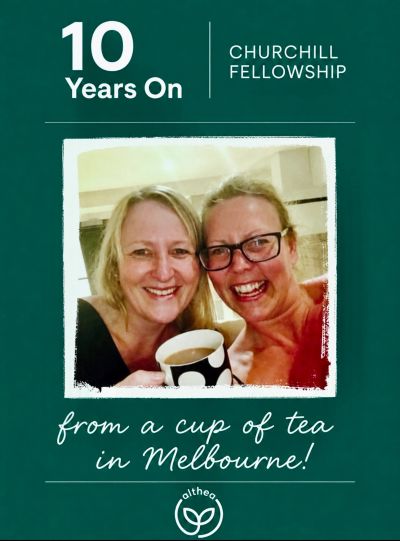
In 2016 I travelled to the US and Australia as a Churchill Fellow to explore innovative responses to financial abuse, understand how different stakeholders work together to address it and evaluate the potential for transferring the learning gained to the UK. See my report and recommendations here (and update on progress here and below).
By happy coincidence, fellow Churchill Fellow and great friend Guddy Burnet and I happened to be in the same city, at the same time. Little did we know then that our professional paths would continue to cross back in the UK after I founded the charity Surviving Economic Abuse (SEA) and Guddy co-founded the Domestic Abuse Housing Alliance and pioneered the Whole Housing Approach.
Ten years on, and we are celebrating all the Fellowship has given us by bringing together #VAWG Fellows for the very first time at a one-day conference later this year, in London. Community, connection and collaboration: addressing violence against woman and girls will take place on 2 December and showcase our collective learning. It will also provide a space to discuss how the work of VAWG Fellows has informed, aligns with, and can build on, the cross-governmental VAWG strategy published in December 2025.
Progress on recommendations

The biggest learning was the need to place financial abuse within the broader category of economic abuse - recommendation one. The Westminster Government recognised this in January 2019.
Recommendation two spoke to the need to name and define economic abuse in legislation. This was achieved via the Domestic Abuse Act 2021.
Key milestones
2006-8

Conducted the first piece of research on economic abuse and developed the Economic Power and Control Wheel.
2011
Created the Surviving Economic Abuse (SEA) website to host research and resources alongside the SEAresource Twitter (X) account.
2014
2014
Led a longitudinal study exploring, with Professors Liz Kelly and Renate Klein, how women and children rebuild their lives after being subjected to domestic abuse.
2015
2015
2014
Worked with Refuge and the Cooperative Bank on the first nationally representative study into experiences of economic abuse.
2016
2015
2016
Started analysing news reports on how economic abuse features in successful prosecutions of the Controlling or Coercive Behaviour (CCB) offence (now the Economic Justice Monitor).
2016
2015
2016
Appointed a Churchill Fellow, exploring international best practice responses to economic abuse. Won the Pol Roger award, presented each year to a Fellow who produces an outstanding Fellowship.
2017
Established Surviving Economic Abuse (SEA) as a charity to raise awareness of and transform responses to economic abuse in the UK. Led SEA as its Founding CEO from January 2017 until May 2024.
2020
Awarded an OBE for services to victims of domestic and economic abuse in the 2020 Queen's Birthday Honours.
2021
2021
Successfully advocated for economic abuse to be named and defined in the Domestic Abuse Act 2021 and for an amendment to the Serious Crime Act 2015 making controlling or coercive behaviour a criminal offence post-separation.
2024
2022
2024
Appointed as an Expert Advisor to the Empower Finance Initiative by the International Finance Corporation (IFC) housed at the World Bank.
2025
2022
2024
Co-founded the International Coalition Against Economic Abuse (ICAEA) and organised the inaugural Global Summit on Economic Abuse.